
Country Profile
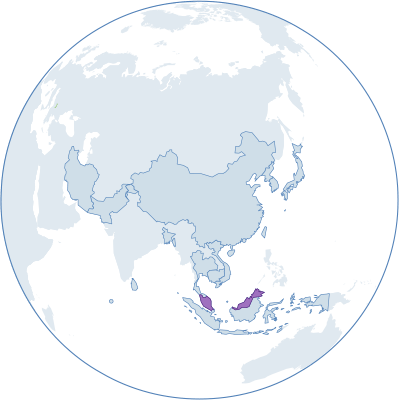
Malaysia
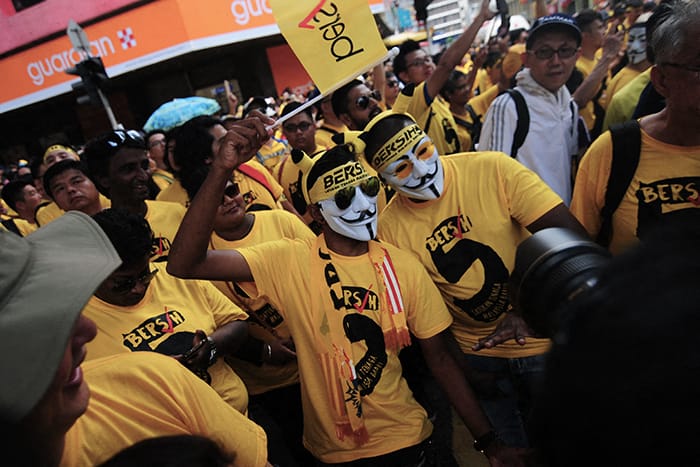
Bersih 0.5 rally is for demanding Malaysia Prime Minister Najib Razak to step down and for fair elections on November 19,2016 in Kuala Lumpur, Malaysia (Photo by Miera Zulyana/NurPhoto) (Photo by Miera Zulyana / NurPhoto / NurPhoto via AFP)
Member organization
Contact Person(S)
Vo Tran Nhat
Penelope Faulkner
Latest update (mm/year)
August 2022
Political context
Form of government (military dictatorship; one-party state; multi-party democracy; nominally civilian government)
Multi-party democracy, elections are normally held every five years unless the Prime Minister seek an early dissolution of the Federal Parliament. In 2020, the ruling Pakatan Harapan coalition government was replaced by the Perikatan Nasional (PN) coalition government led by Prime Minister Muhyiddin Yassin and 17 months later, Ismail Sabri Yaakob. This 2020-2022 political crisis eventually triggered several early state elections and a 2022 snap general election, which saw the formation of the Anwar Ibrahim-led coalition government.
Situation of elections (free/fair; high election-related violence; farcical election; no elections; date of latest elections)
There are election related offenses, with vote-buying being a common practice by most political parties.
Space for civil society
Civil society is generally vibrant where they exercise their freedom of expression to advocate for policies. In 2020-2022, the Perikatan Nasional (PN) government applied draconian laws to harass Human Rights Defenders, journalists and political individuals.
Media environment
Media is generally free but it should be noted that opposition and political dissent are often barred from appearing in national media, and online media has also suffered reprisals.
Independence of the judiciary
Judiciary independence is put into question when corruption cases of established political individuals have been acquitted from charges in a hasty manner.
Repressive laws (unrelated to assemblies or COVID-19)
Draconian laws that restrict free speech: Communication and Multimedia Act 1998; Sedition Act 1948. Laws that allow detention without trial: Security Offences (Special Measures) Act (SOSMA) 2012; Prevention of Crime Act 1959; Prevention of Terrorism Act 2015; Dangerous Drugs (Special Preventive Measures) Act 1985.
Respect for human rights
Malaysia was elected to the UN Human Rights Council in October 2021 but the current government does not ensure their policies meet international human rights standards.
Conflict areas
No conflict areas in Malaysia but it is worth noting that the insular Sabah State suffered an armed invasion during 2013 by the separatist group “Royal Security Forces of the Sultanate of Sulu and North Borneo.”
Forms of ideological extremism (religious, political, sectarian)
Religious extremism in Sabah: Abu Sayyaf group.
Legal framework
Constitutional provisions related to the right to peaceful assembly (article number(s); text of the provision(s))
Article 10 (1) (b) stipulates that all citizens have the right to assemble peaceably and without arms.
Specific law(s) related to public assemblies (name of the law(s); date of adoption and promulgation)
Peaceful Assembly Act (PAA) 2012. Date of royal assent: 30 January 2012, date of publication in the Gazette: 9 February 2012.
Main obstacles /restrictions to public assemblies (for example: notification requirements; ban on assemblies and reasons for the ban; persons who are barred from organizing/participating in an assembly; places where assemblies cannot be held; grounds for dispersal)
Notification requirements: Under Section 9(1) of the PAA, organizers must inform the authorities five days before the assembly is to be held.
Persons who are barred from assembling: Under Section 4 of the PAA; non-citizens; persons under the age of 21 are banned from participating and organizing an assembly.
Places barred from assemblies: Under Section 3, First Schedule of the PAA, dams, water treatment plants, electricity generating stations, petrol stations, hospitals, fire stations, airports, railways, land public transport terminals, ports, canals, docks, wharves, piers, bridges, and marinas, places of worship, kindergartens, and schools.
Other laws/decrees that are frequently used to arrest demonstrators and/or limit the right to freedom of assembly
The Communications and Multimedia Act 1998 and Sedition Act 1948 have often been used to deter protest by harassing and arresting organizers of assembly.
Penalties for violating law(s) relating to public assemblies (for example: fines, jail terms)
Person found to be contravening the PAA will be fined up to RM10,000 (about US$2,200).
Law enforcement
Use of force during demonstrations (for example: batons; rubber bullets; teargas; water cannons; firearms; lethal force)
The last major use of force during a demonstration was the Bersih protests in Kuala Lumpur, 2007 and 2012. Since then, the majority of the demonstrations have been peaceful. However, in August 2021, 31 protesters were detained violently during a vigil night to commemorate the victims of Covid-19. More recently, police barricades were used to prevent peaceful protesters from marching to the assembly point. This occurred in Kuala Lumpur during the Walk for Judicial Independence on 17 June 2022, when the protesters were prevented from marching to Parliament, and during the #Turun assembly on 23 July 2022, when participants were deterred from marching to Independence Square.
Harassment of protesters before, during, and after demonstrations (for example: surveillance, threats, arrests, photographing protesters, filing of criminal charges)
Aside from the harassment through the use of draconian laws, organizers of assemblies in 2021 were visited by police in their residences and their personal information was publicly revealed by the police.
Use of non-law enforcement personnel (military or paramilitary personnel or units; vigilantes, militia)
None.
Presence of counter-protesters or other non-state actors
Rarely.
Accountability for abuses committed by law enforcement agencies and assembly participants
There have been no documented cases in which enforcement agencies were investigated for abusing their power during the policing of assemblies.
Recent protest
Examples of recent (over the past 5 years) most common/significant types of public assemblies
Submission of memorandum by Bersih 2.0 to Parliament on redrawing of electoral boundaries – 27 March 2018
Tangkap Jho Low rally – 14 April 2018
Pandang ke Sabah rally – 16 September 2018
Protest by Universiti Malaya students during then-Prime Minister Najib Razak’s talk with supporters near university grounds, during which physical strangling and slapping of a university student took place – 22 March 2019
‘Mahasiswa Bersama VC’ demonstration – 25 October 2019
‘Demokrasi Mati, Ayuh Turun ke Jalan’ protest – 25 February 2020
‘Save Malaysia’ rally – 1 March 2020
Black Thursday commemoration (in solidarity with those who died in custody) – 16 July 2020
‘Keluar and Lawan’ assembly – 31 July 2021
Candlelight vigil at Dataran Merdeka to commemorate COVID-19 victims – 19 August 2021
#TangkapAzamBaki protest – 22 January 2022
Walk for Judicial Independence – 17 June 2022
#Turun Assembly – 23 July 2022
Women’s March – 12 March 2023
International Workers’ Day rally – 1 May 2023
Logistical information
Visa requirement for foreign observers to conduct assembly monitoring
There is no specific visa type for foreigners who wish to travel to Malaysia to observe an assembly. Under Section 4(2)(a) of the Peaceful Assembly Act 22012, foreigners are not allowed to organize or participate in an assembly.
Those who require eVisa may apply through the following official website:
https://malaysiavisa.imi.gov.my/evisa/evisa.jsp
Exemptions of visas for certain countries/nationalities
Please refer to the following official website:
https://www.malaysia.gov.my/portal/content/133
Security for foreigners (for examples: risk of denial of entry, deportation, arrests, targeted attacks)
Between 2015 and 2017, the following foreign activists were denied entry to Malaysia and deported: Hong Kong student activist Joshua Wong; Indonesian human rights activist Mugiyanto Sipin; Singaporean human rights defender Han Hui Hui; and Bangladeshi human rights activist Adilur Rahman Khan.
Monitoring
Organizations/groups that engage in public assembly monitoring
SUARAM; Centre of Independent Journalism; Malaysian Bar Council; SUHAKAM (National Human Rights Commission of Malaysia)
Mandatory or voluntary identification requirement for monitors (for examples: vests or cards)
While there is no mandatory requirement, independent monitors can be easily identified through their attire and cards.
Role of national human rights institution as an independent observer of assemblies
SUHAKAM has played its role dutifully as an independent observer of assemblies and they have been generally present during major assemblies.
Presence of media at assemblies
Media personnel do not face any barriers or restrictions in covering and reporting on assemblies.
